Role: Lead Product Designer, Upland Software · Duration: 2024-present (Prism modernization: mid-2026 onward) · Focus: Legacy UX audit, persona-coverage validation, design system consolidation, internal research
The Challenge
RightAnswers is a mature knowledge management product with a genuinely strong track record: high customer satisfaction, long average customer tenure, industry certifications and awards. But its interface hadn’t kept pace with the rest of the market, and it was starting to cost the business more than internal opinion. In a competitive sales cycle, a prospect described it, verbatim, as looking “like MySpace.”
That single line crystallised something the internal survey work I ran later confirmed at scale: visual modernization wasn’t just an internal nice-to-have, it was an active, named objection in the sales process. The challenge wasn’t just “make it look modern,” it was proving where the redesign needed to focus, and building a new foundation (Prism) that wouldn’t just repeat the drift and inconsistency problems of the legacy product.
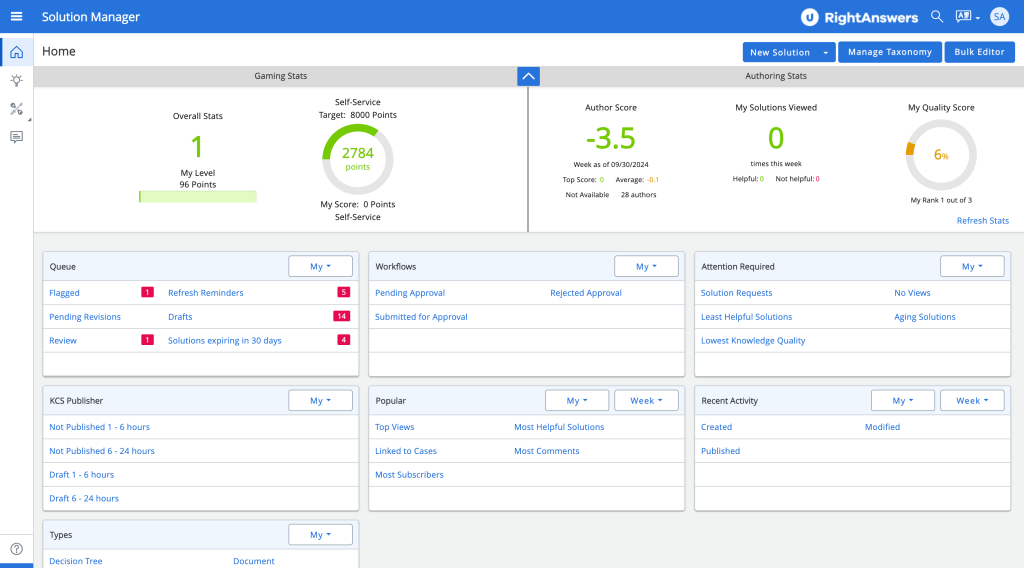
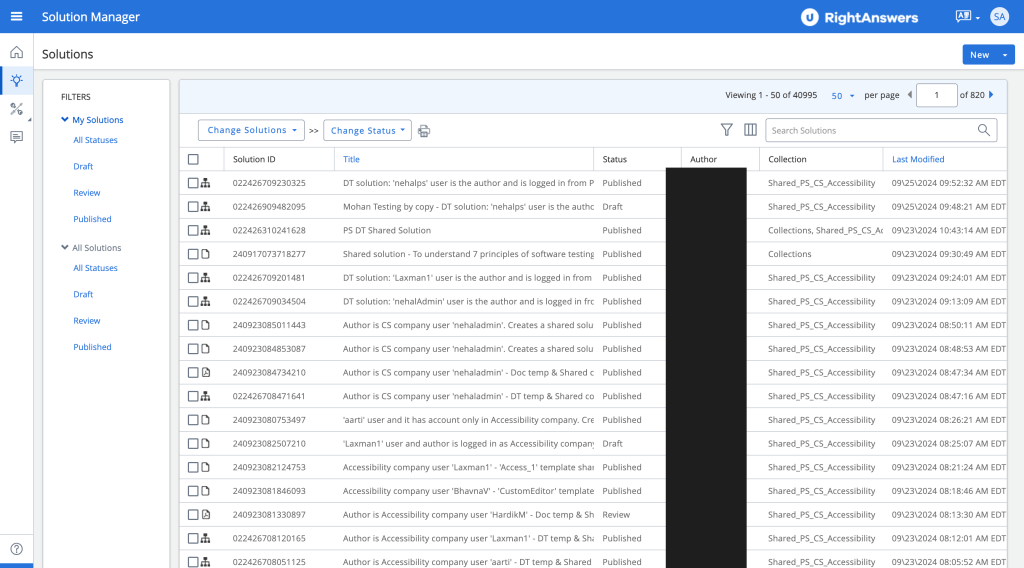
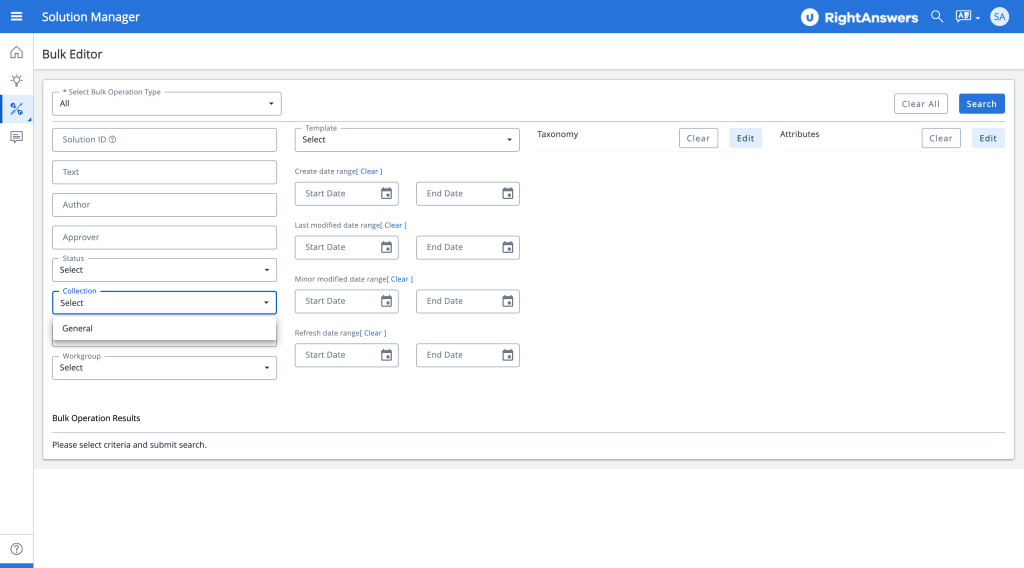
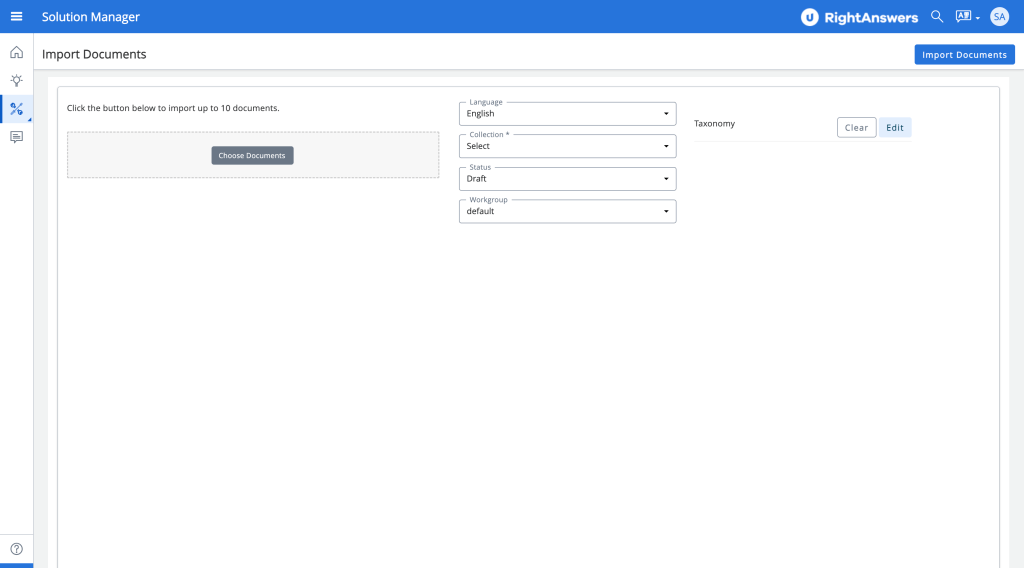
The legacy Solution Manager, 2024
Establishing the Real Problem, Not the Assumed One
Rather than starting from a visual refresh brief, I ran a two-round internal survey (33 respondents across both rounds) to find out what was actually driving dissatisfaction. Visual modernization came back as both the most-repeated internal ask and the most cited external sales objection, giving the modernization programme a validated starting point rather than a guess.
Alongside this, I ran a full audit of the existing legacy interface, an as-is capture of the Solution Manager UI, to establish exactly what the new build needed to replace, extend, or intentionally leave behind.
Catching Drift Before It Became Debt
Early in the legacy product’s life, a small inconsistency, a button weight token that had drifted out of sync across Figma, the design tokens file, and the shipped CSS, had gone unnoticed and unfixed. When I found it, rather than just correcting the one instance, I used it as the basis for a standing design rule: Figma is the single source of truth, audited directly against shipped code rather than assumed correct. That audit method then became something I reused elsewhere, most notably as a 69-ticket persona-coverage audit for the Prism rebuild, cross-referencing every ticket in the backlog against the product’s documented user personas. That audit surfaced real coverage gaps and produced new backlog tickets before those gaps became live bugs.
Building Prism on Firmer Ground
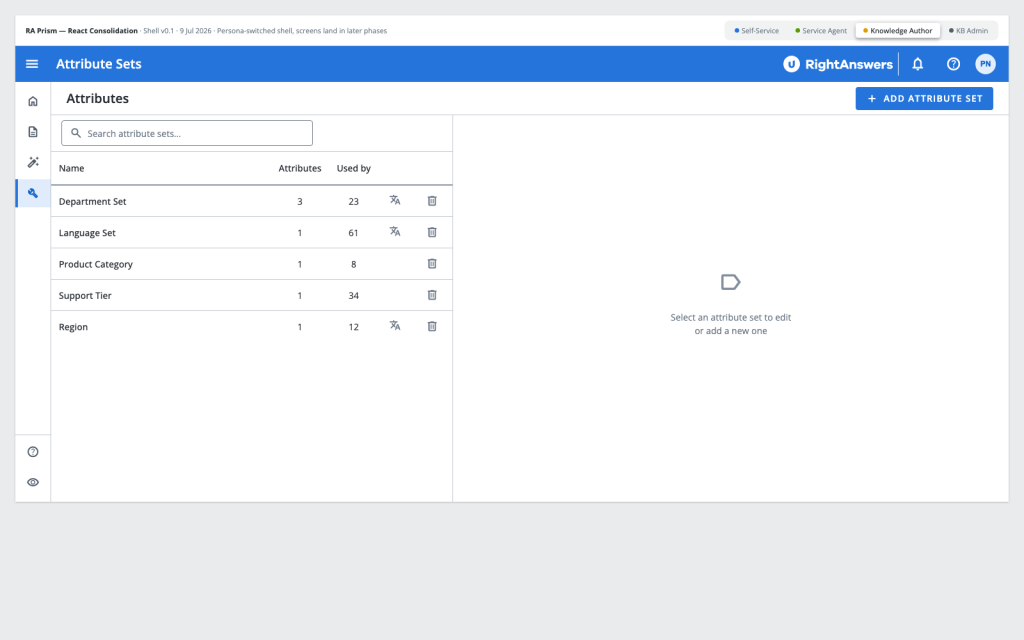
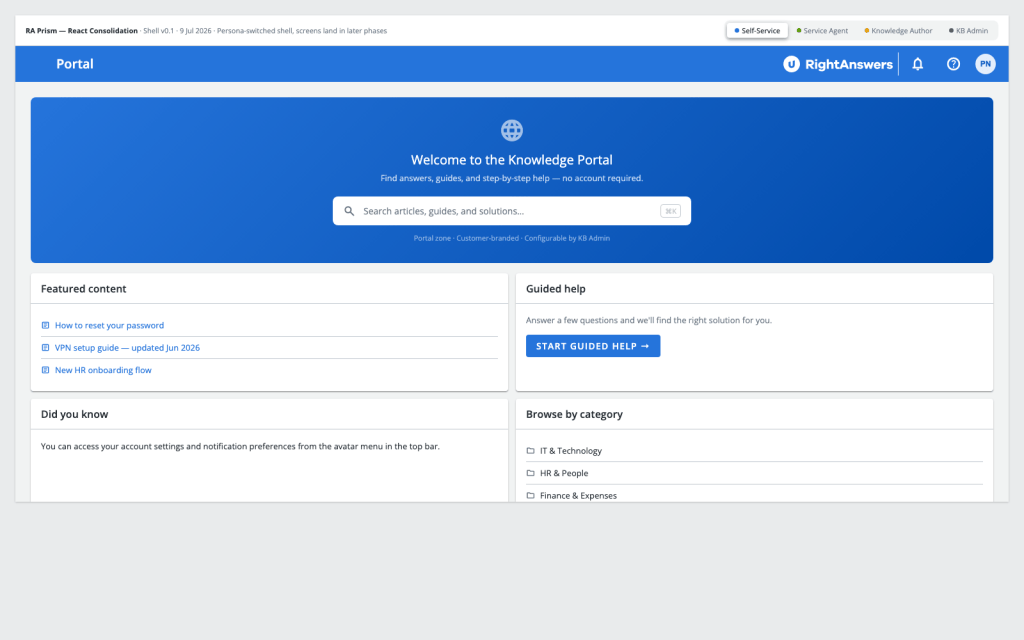
The new build needed a stronger foundation than “come up with new screens.” I built a cross-product pattern token framework (KCM-UXP), a governance system defining consistent design tokens across products in the business unit, rather than letting Prism drift the same way the legacy interface had. This wasn’t a solo standard-setting exercise: I paired it with a 206-assertion interaction test suite for the new React build, so consistency claims were checked against actual running code rather than design intent alone.
Working the Detail, Not Just the Headline
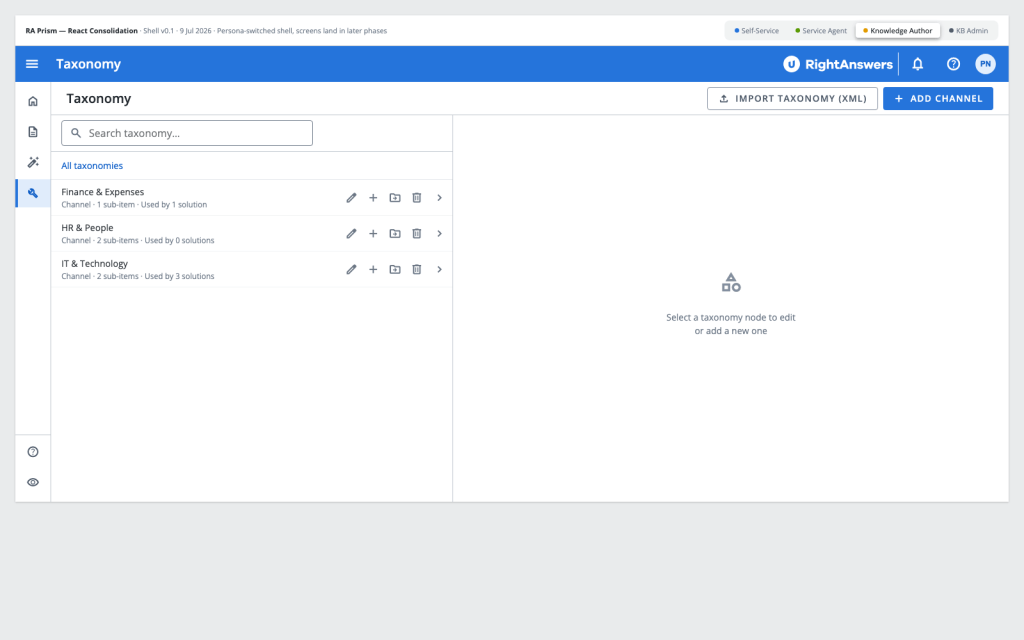
Some of the most important design decisions in this programme were small and unglamorous rather than dramatic: reprioritising taxonomy work ahead of a related feature after an internal check-in surfaced it needed to happen first; rebuilding a taxonomy browser from a nested tree into a flat drilldown after testing showed it became unreadable at depth (validated against precedent from tools like Zendesk and Drupal); and flagging a genuine gap, multilingual support, that had no clear owner, so it didn’t quietly fall through the cracks between product areas.
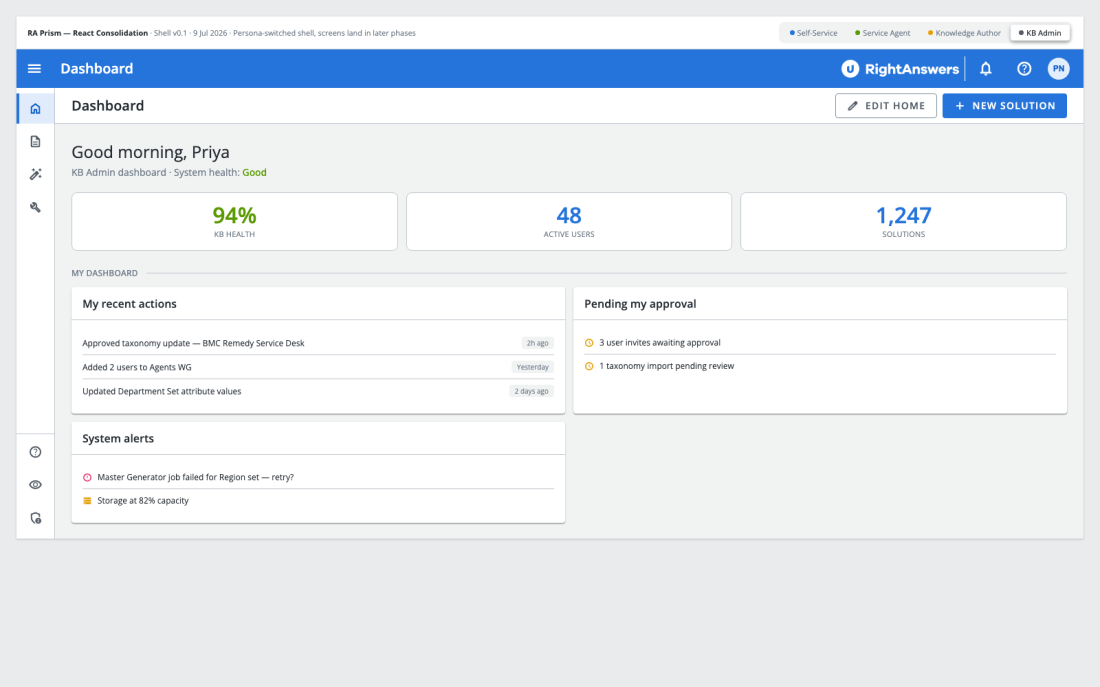
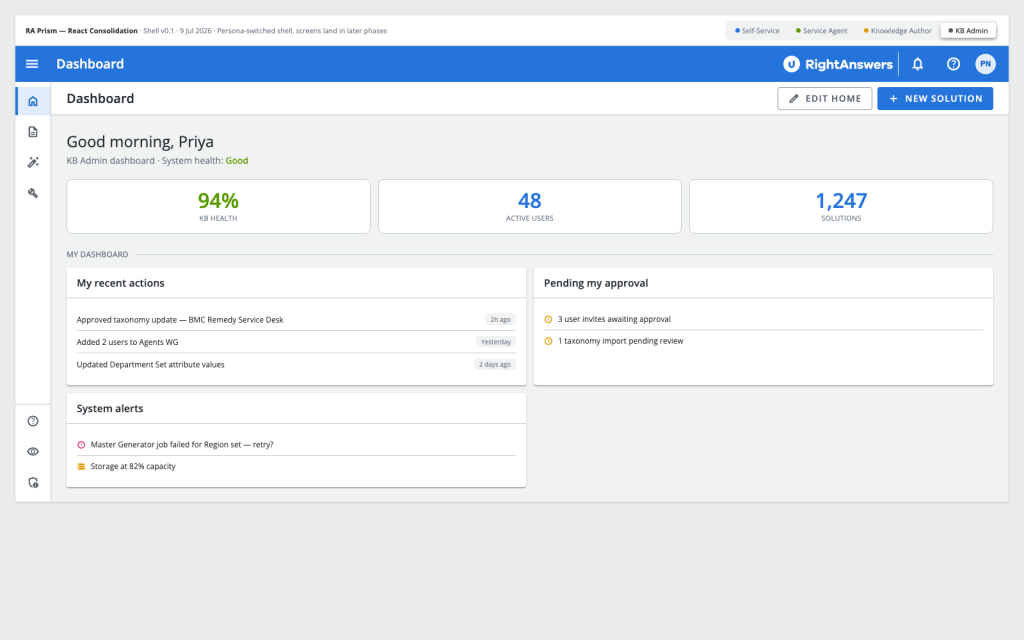
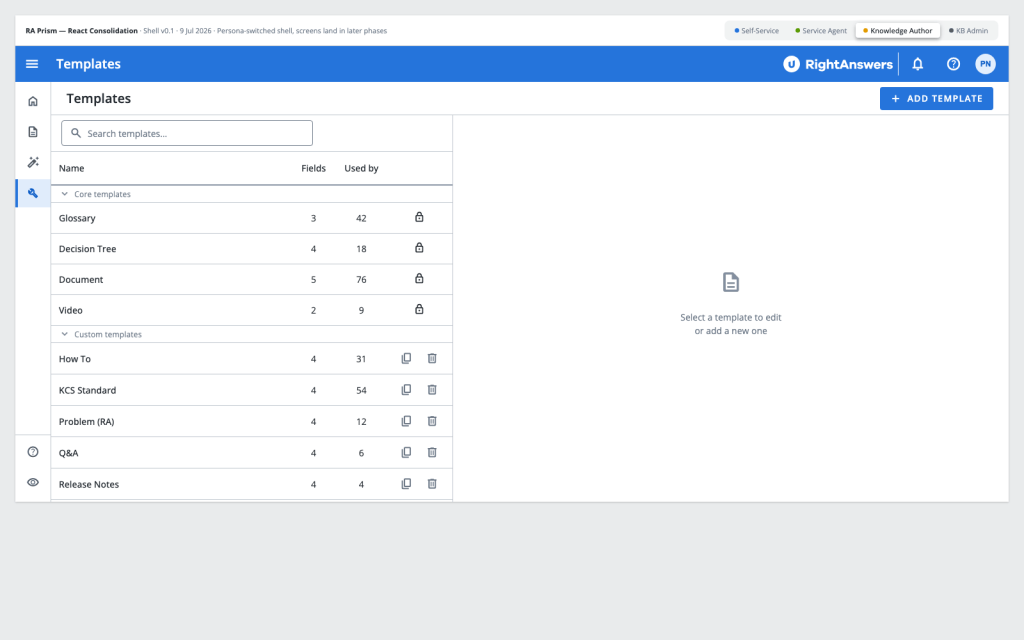
Prism, the rebuilt experience
Outcome
The Prism modernization programme is ongoing, built on a validated problem statement (the survey data), a consistent technical foundation (the token framework and test suite), and a persona-coverage audit that caught real gaps before they shipped, rather than a redesign driven by aesthetic instinct alone.
Some specifics in this case study are generalised in line with the confidentiality of Upland Software’s internal product and customer data.

