Designing a Digital Tax Service for HMRC
Role: UX Designer, Accenture (embedded with HMRC) · Duration: 2022–2024 · Focus: End-to-end user journey mapping, registration and identity flows, error handling
The Challenge
In 2023, the UK began implementing the OECD’s Pillar 2 global tax reform — a new international framework requiring large multinational groups to pay a minimum 15% corporate tax rate, designed to prevent profit shifting between countries. HMRC needed an entirely new digital service to support this: covering registration, ongoing subscription, and eventual payment for two related but distinct taxes (Multinational Top-Up Tax and Domestic Top-Up Tax).
There was no existing UK service to model this on. The user base was narrow but high-stakes: multinational enterprise groups with consolidated global revenue over €750 million, along with the tax agents who act on their behalf. Get the design wrong, and the risk wasn’t a minor support ticket — it was a large corporate group misapplying a tax obligation with real financial and legal consequences.
My Role
I owned Phase 1 of the design process: mapping the complete end-to-end user journey across registration, subscription, and initial payment setup. This meant defining the screen-by-screen logic, validation rules, and decision paths that the entire service would be built from — working closely with policy teams, service designers, user researchers, and the technical delivery team to make sure the design reflected both legal requirements and real user behaviour.
Key Design Problems and Decisions
Keeping ineligible users out before they cause a problem
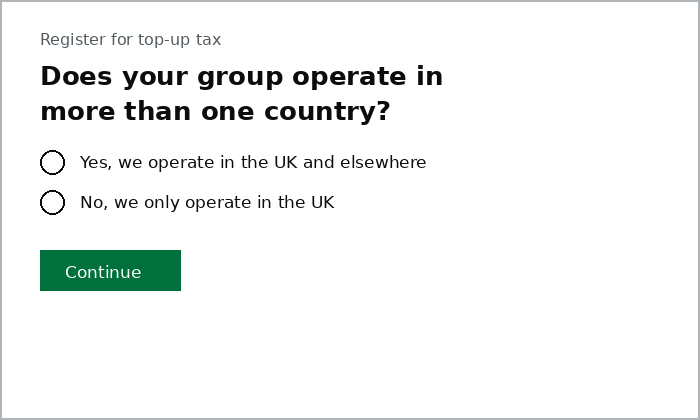
Because eligibility hinges on a specific, high revenue threshold, there was a real risk of confusion — particularly between the domestic and global versions of the tax, which sound similar but apply differently. I designed a set of eligibility questions at the very start of the journey, screening users on revenue and operational presence before they could proceed. Anyone outside scope was redirected out of the registration flow entirely, rather than being allowed to submit an incorrect application.
Handling irregular accounting periods
The €750 million threshold assumes a standard 365-day accounting period — but not every group’s accounting period runs that length. I designed guidance and error-handling content that walked users through the adjusted calculation dynamically, rather than leaving them to interpret dense legislative wording themselves.
Verifying identity at a level appropriate to the stakes
Because the service involves financial and payment capability, it required a high level of identity assurance. I mapped the integration between Government Gateway authentication, multi-factor authentication, and automated business-matching against Companies House and HMRC records (using Company Registration Numbers and Unique Taxpayer References) — including designing the fallback flows for when that matching failed and needed manual resolution.
Designing for the full lifecycle, not just sign-up
Groups can move in and out of scope over time — a group might drop below the threshold after initially registering. I designed the logic for a “Below Threshold Notification” flow that shifts an account to inactive status until reactivated, so the service could handle a group’s status changing without requiring a support call.
Building in accessible routes from the start
Given the service’s scale, I made sure support flows accounted for users with access needs from the outset — integrating routes to Relay UK and BSL video interpretation into the support journey, rather than treating accessibility as an add-on.
Working Within the GOV.UK Design System
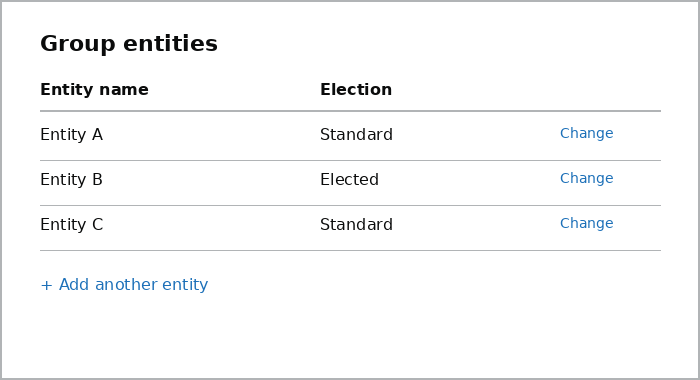
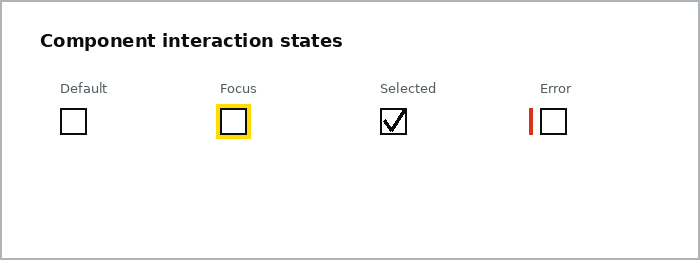
The service made heavy use of established GOV.UK patterns — add-to-a-list (adapted to handle groups managing 10+ sub-entities at once), check-your-answers summaries, error summaries, and structured form inputs — while extending them to handle a level of financial and structural complexity the standard patterns weren’t originally built for.
Outcome
The service launched with registrations opening in 2023, aligned to a digital service strategy that targeted a 30% reduction in adviser-led contact volume by the end of the 2024–25 financial year — reflecting the goal of a service clear enough that most users wouldn’t need to call HMRC to complete it.
Some specifics in this case study are generalised or omitted in line with the confidentiality of HMRC and Accenture client work.


